Our 2026 Stream School Schedule has officially been released!
Thanks to our brand new (and amazing) volunteer team:
The Stream Team
We are able to offer more Stream School experiences than ever before this year.
Here is what you need to know about Stream School 2026:
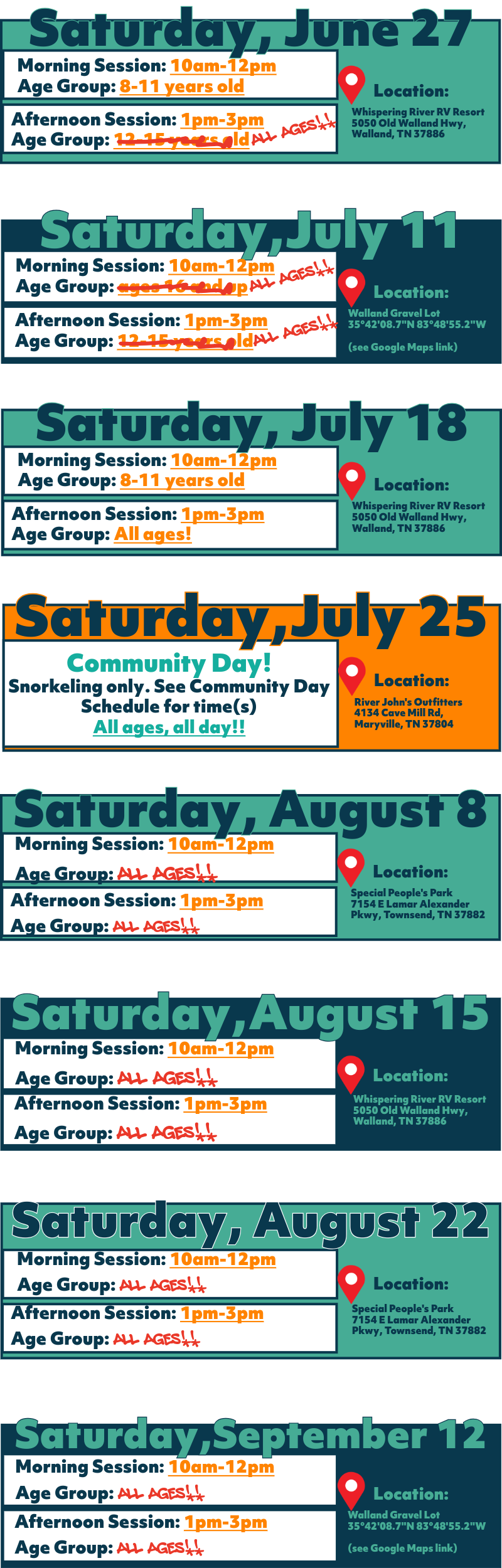
Stream School Sessions are 2 hours long, and we offer 2 per Saturday on the schedule: a morning one that is 10am-12pm and an afternoon one that is 1pm-3pm
There are age categories for different Stream School Sessions. We are doing this to best tailor subject matter to participants. This will make everyone’s experience as fun and impactful as possible.
Age categories can be subject to change if the age categories are limiting to a lot of participants. Please reach out to sarah-kate@littleriverwatershed.org if this is the case for you!
We are using multiple locations. Be sure to check the location of where you sign up. You will be sent location information with your sign-up confirmation and reminder email.
See the schedule below:
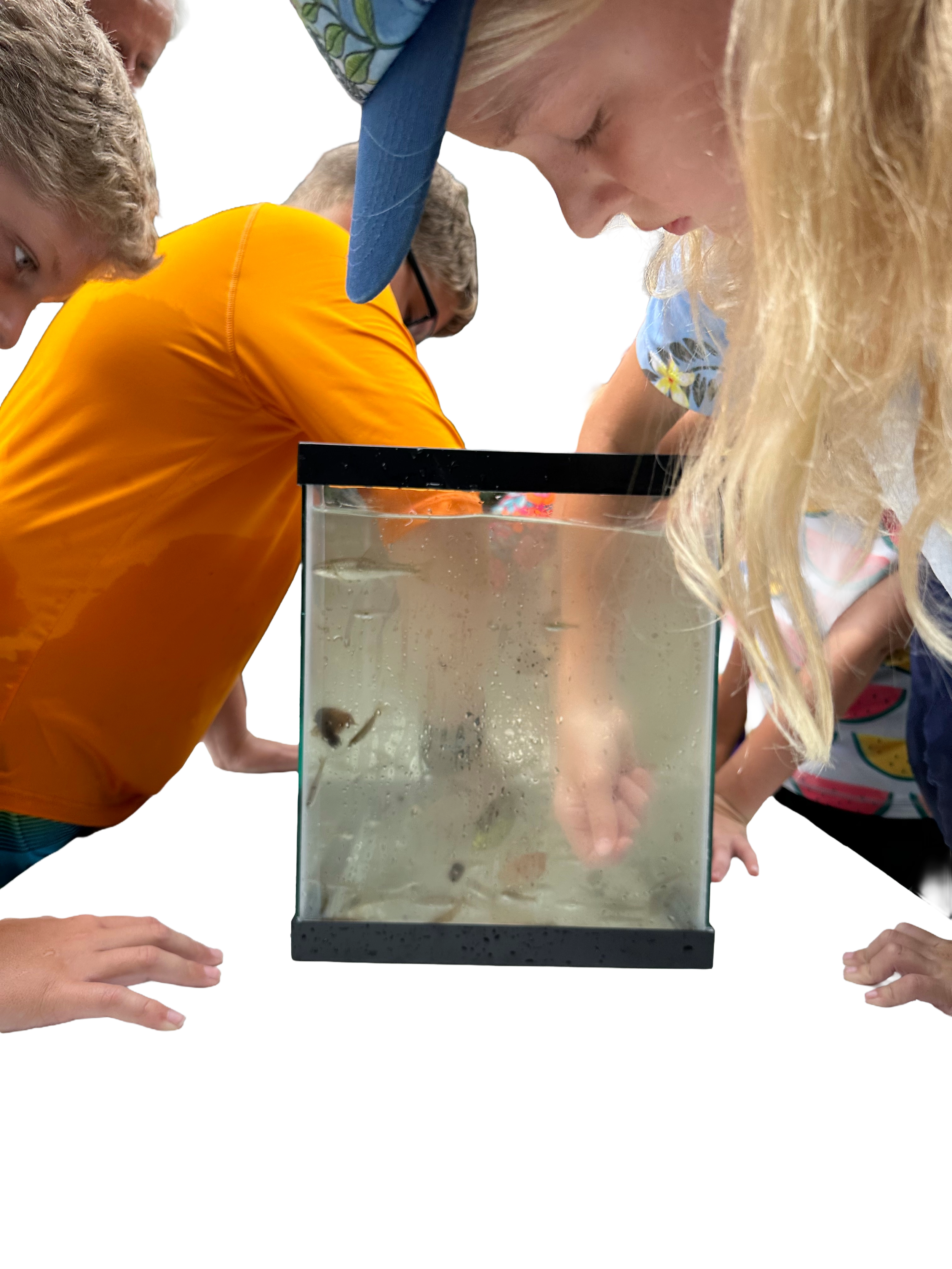
FAQ’s
-
Any age is welcome to sign up! This is to offer flexibility and allow whole families to come together! Children 6 and under must have an adult parent or guardian accompanying them at all time during the session.
-
If some group members are within 2 years of the age limits, they are welcome to sign up with the rest of your group. Just shoot an email to sarah-kate@littleriverwatershed.org to let us know!
-
Email sarah-kate@littleriverwatershed.org and let us know. This is the first year we are approaching Stream School this way, so this is a learning experience for us all!
-
No. A parent or guardian 18 years and older must be on the premises for children 6 and under. Children 4 and under must be paired with an adult at all times.
-
Let sarah-kate@littleriverwatershed.org know as soon as possible!
-
If a spot for that Stream School Session opens up, we will reach out as soon as possible to participants in the order they signed up.
-
Wear something to get in the river! Water shoes and bathing suit. Note the river water temperature stays at or below 70°, if you have wetsuit it may be useful. If you have a snorkel and mask, bring it! If not, we have plenty to share.
Also be sure to bring a water bottle, sunscreen, and a snack.
More information on what Stream School is:
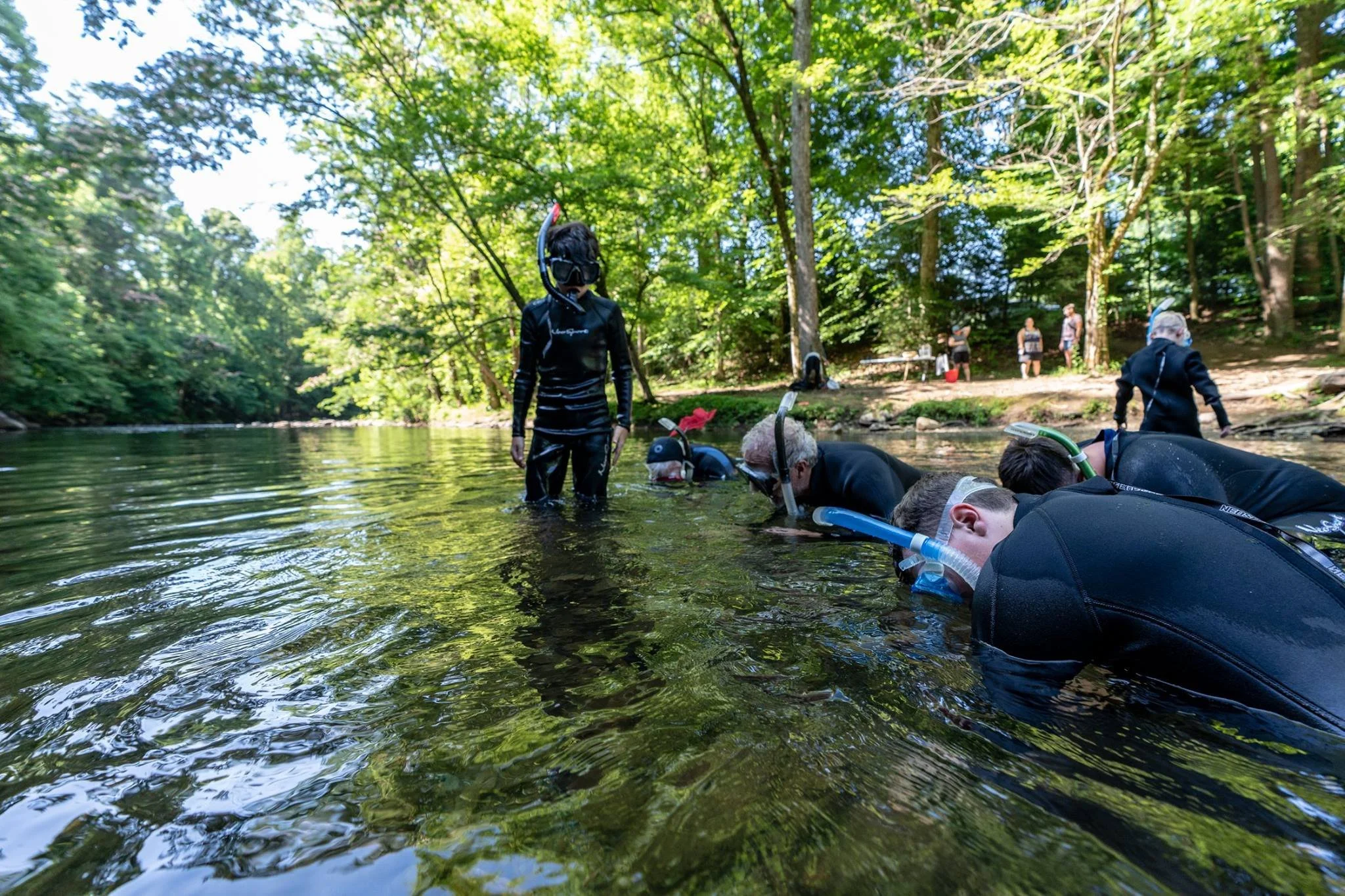
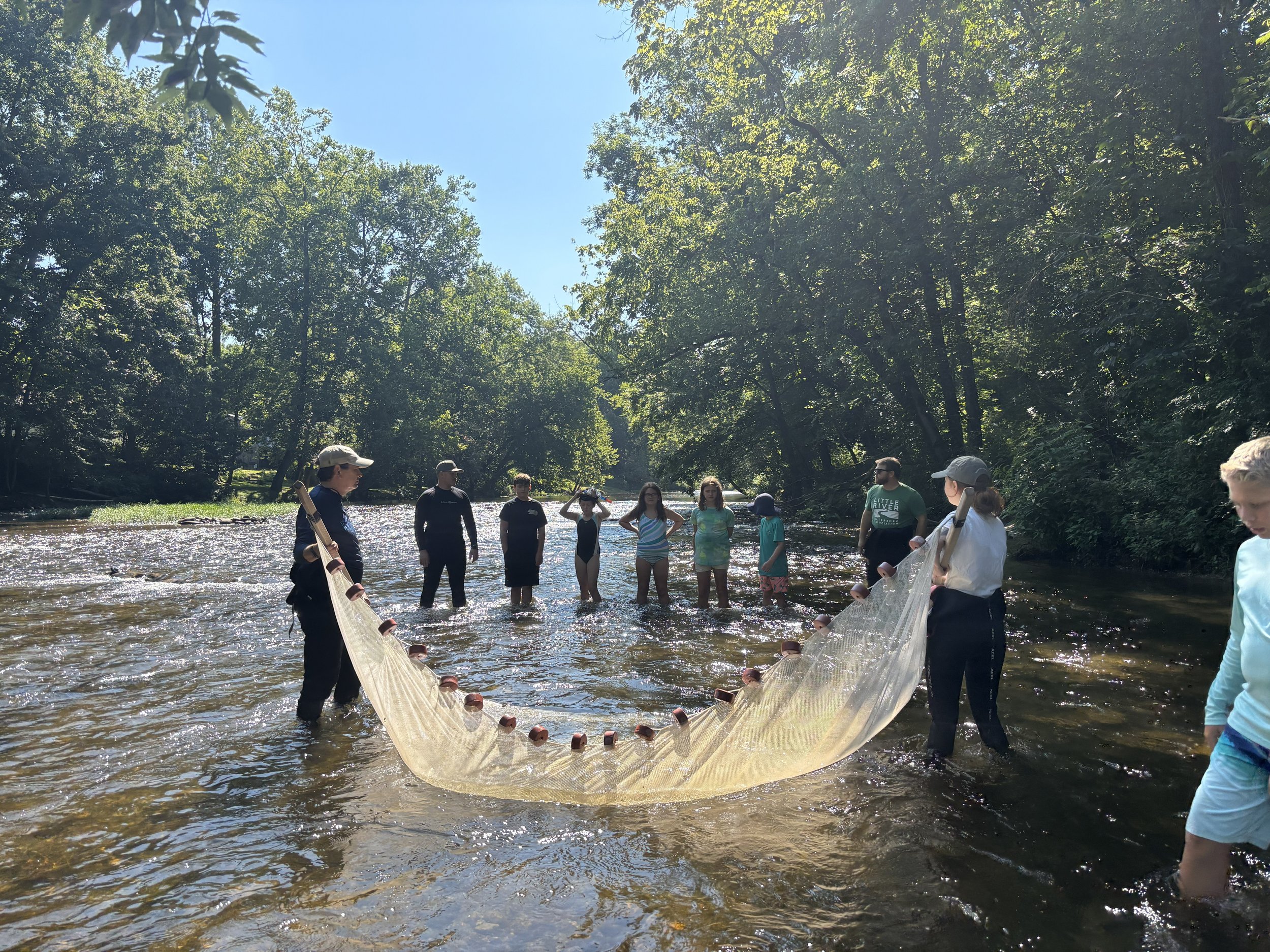
Stream School is a hands-on, outdoor education program that is Stream Ecology 101 for ages 4-99! Did we mention it happens in the Little River?
The program is based on Science, Technology, Engineering, and Math, or STEM, concepts. It incorporates environmental, chemical, and aquatic sciences. The one-day, 2-hour camp consists of 4 main topics: Watershed Systems /Water Cycle, Fish Identification, Macroinvertebrates, and Water Quality.
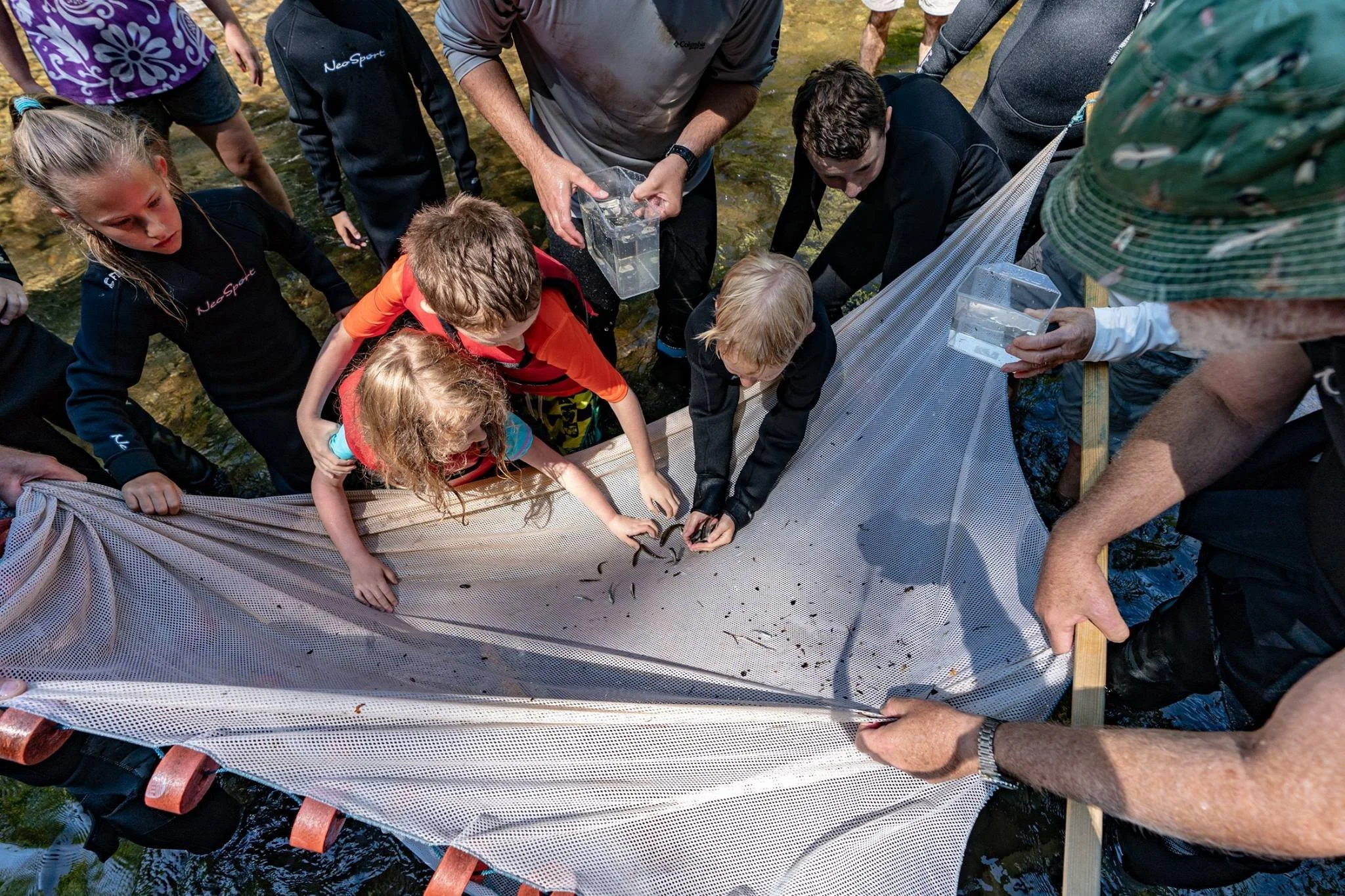
We begin the two-hour class by discussing Little River and its watershed: where does it originate; how many miles does it flow, why is it important? Next, we discuss river flow (why flow changes based on geography and weather, and why it is important) We also discuss what all is impacted by the watershed, the fish and the birds, insects and amphibians that rely on the river for a water source, and how we as humans impact and are affected by out water systems.
Students also learn about the water cycle, and how water cycles from the land to the rivers and streams, and then back again. It is important for students to make the connection that water is in a constant cycle to understand that pollution in one area can then later affect another area.
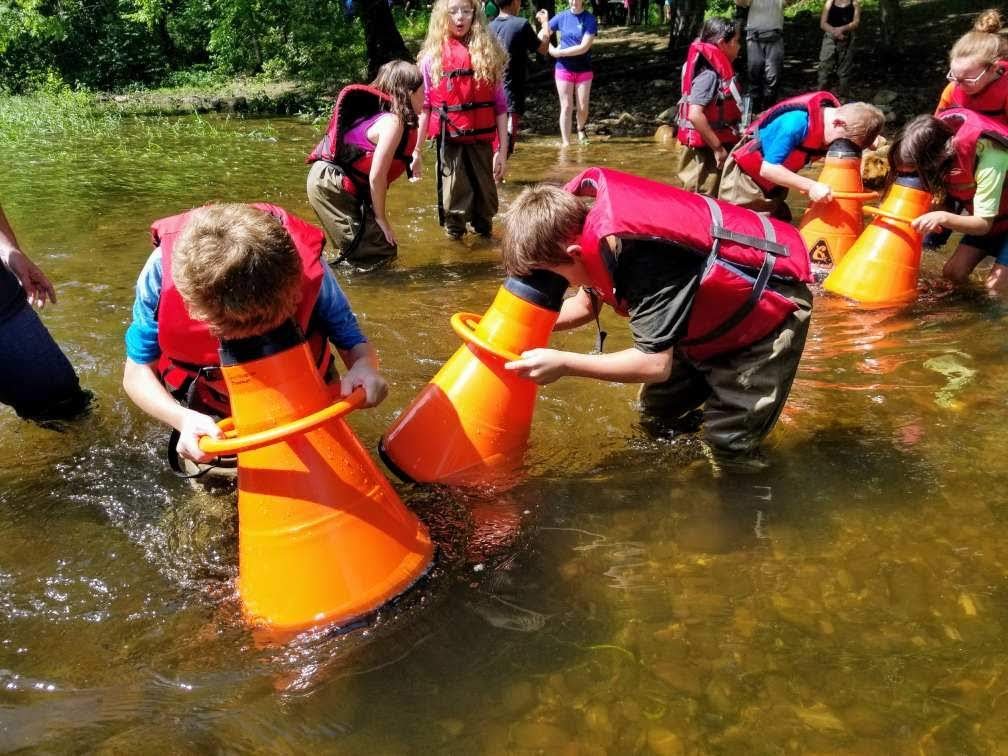
Once the students know how that rate might change if the river wasn’t as wide, if the river was deeper, or if we just had a lot of rain, students can understand that flow isn’t constant; it is a function of water volume and velocity, and it changes with weather, human interactions and topography, and it impacts water quality, organism habitat, sediment transport, and dissolved oxygen levels.
From these different stations kids can begin to understand the importance of clean water in our watershed systems and what all organisms are affected by clean or polluted systems.
Special thanks to our partners that help us host Stream School.